
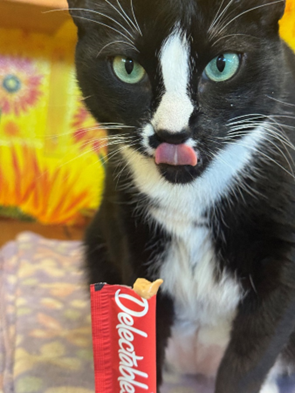
Cats have a reputation for being independent, aloof, and perfectly content doing their own thing. But recent research suggests there’s much more going on beneath the surface—and your cat may be more social than you think. During a recent continuing education course, we explored a fascinating study by researcher Monique Udell titled “Are Cats Social? Using Science to Support Cat-Human Relationships.” The goal of this study was simple: to better understand what cats truly value.
What Do Cats Prefer Most?
Researchers gave cats a choice between four things: Food, toys, scents, and human interaction. Both pet cats and shelter cats were observed to see which option they chose to spend the most time with and the results were surprising: Most cats chose human interaction as their top preference—even over food. While food was often the second favorite, many cats consistently preferred spending time with people. This challenges the long-standing belief that cats are primarily food-motivated or prefer to be left alone. Every cat is unique and, just like people, they have individual personalities. Some cats in the study preferred food, toys, or scents over social interaction. However, the overall trend was clear: Many cats actively seek out and enjoy time with their humans.
Do Cats Form Emotional Bonds?
Yes — they absolutely do. Cats can form secure attachments to their owners, even if they express it differently than dogs. You might notice your cat becoming vocal or restless when you leave, then greeting you or settling down once you return. This behavior reflects a secure attachment and shows that your presence matters to them.
One of the most encouraging findings from the study was that shelter cats showed similar preferences for human interaction as pet cats. This tells us something very important: cats don’t have to be perfectly socialized as kittens to form relationships with people later in life. Even cats with limited early socialization can learn to enjoy relationships with people through positive, gentle interactions.
What This Means for Cat Owners
Cats are not just independent companions — they are social animals with emotional needs. Even if your cat seems content doing their own thing, research shows that many cats value time, attention, and positive interaction with their humans. Spending quality time together, respecting your cat’s comfort level, and building positive routines can strengthen trust and improve overall wellbeing. A little patience and understanding can go a long way toward supporting a happier, healthier relationship with your cat.
Tips for Building a Stronger Bond with Your Cat
- Spend intentional time together
Even a few minutes a day—playing, brushing, or simply sitting together—can strengthen your relationship. - Let your cat take the lead
Cats feel safest when they’re in control. Allow them to approach you and pay attention to their body language. - Create positive routines
Consistent feeding, playtime, and quiet time help your cat feel secure and confident. - Use play as social time
Interactive toys (like wand toys) allow your cat to engage with you while tapping into natural hunting instincts.
Be patient with shy or reserved cats. Some cats need more time to warm up — and that’s okay. With calm, positive experiences, many cats can learn to enjoy social interaction at any age. The idea that cats are distant or uninterested in people is quickly being replaced by a more accurate understanding: Cats are social, emotional animals who value connection — just in their own unique way. By respecting their preferences and spending meaningful time together, you can build a stronger, more rewarding bond with your feline companion.
