
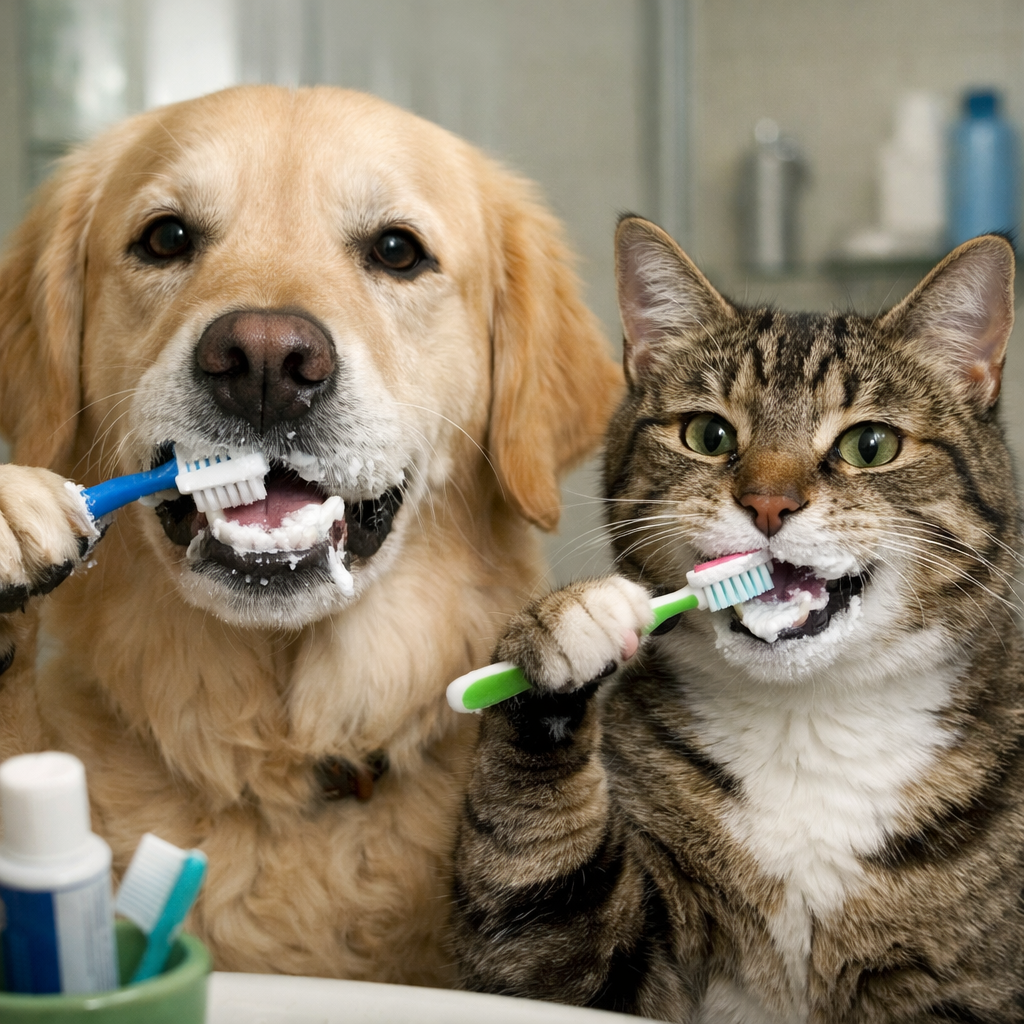
February is National Pet Dental Health Month!
Dental health is just as important as vaccines, nutrition, and exercise, and is actually one of the most common conditions diagnosed in dogs and cats. It begins when plaque—a sticky film made by bacteria—builds up on the teeth and hardens into tartar, leading to gum inflammation and gingivitis. Left untreated, dental disease can progress below the gumline and cause damage to the tissues and bone that support the teeth.
Untreated dental disease can affect more than the mouth—oral bacteria may enter the bloodstream and impact overall health. Once dental disease reaches advanced stages, treatment often requires professional dental cleanings under anesthesia and, in some cases, tooth extractions.
The good news is that most dental disease is preventable. With the right combination of home care, proper diet, and regular veterinary dental care, you can reduce discomfort, lower long-term costs, and support your pet’s overall quality of life.
How to Help Prevent Dental Disease
Doing something for your pet’s teeth every day—even small steps—can make a big difference. Some suggestions are listed below to help maintain healthy teeth and prevent dental disease:
- Toothbrushing (Best Option)
Brushing with pet-safe toothpaste helps remove plaque before it hardens. Daily brushing is ideal, but even a few times a week helps.
Our team can show you how and recommend products. - Veterinary Dental Diets
Prescription dental diets are designed to reduce plaque and tartar as your pet chews and are great for pets that won’t tolerate brushing.
We recommend Royal Canin Prescription Dental Diet, Hill’s Prescription Diet t/d Dental Care, and Purina Pro Plan DH Dental Health Diet. - Oral Health Products
Veterinary-approved rinses, gels, supplements, and chews can help reduce bacteria and support gum health when used alongside brushing or dental diets.
We highly recommend Dechra VETRADENT Water Additive, which can be purchased at our hospital. - Regular Veterinary Dental Exams & Cleanings
Even with excellent home care, pets still need routine dental evaluations. During wellness visits, we check your pet’s teeth and gums and recommend professional cleanings when needed. These cleanings remove tartar above and below the gumline—areas home care can’t reach.
Signs of Dental Disease
Pets often hide dental pain. Please contact us if you notice any of the following:
- Bad breath
- Red, swollen, or bleeding gums
- Yellow or brown buildup on teeth
- Dropping food or chewing on one side
- Pawing at the mouth or facial swelling
- Appetite or behavior changes
Dental disease is common—but not inevitable. With consistent home care, proper diets, supportive products, and regular veterinary care, most pets can maintain healthy mouths for life. If you have questions or want help choosing a dental prevention plan, please call or text us at (321) 724-0234. We’re happy to help!
