
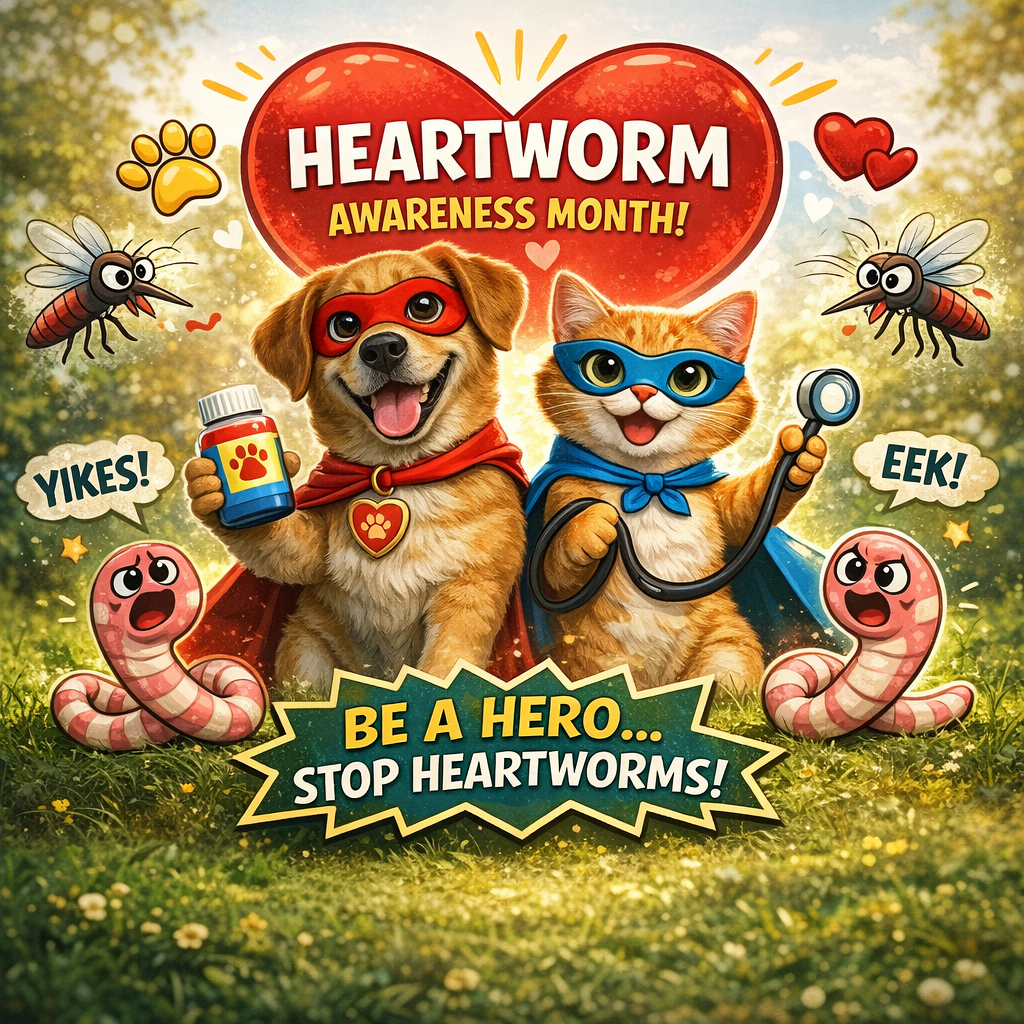
April is Heartworm Awareness Month, a time to learn about one of the most serious—yet preventable—diseases affecting pets. Understanding heartworm disease is one of the best ways to keep your pet safe and healthy.
What is Heartworm Disease & How Do Pets Get It?
Heartworm disease is caused by parasitic worms that live in the heart, lungs, and blood vessels. These worms can grow up to a foot long and may lead to lung disease, heart failure, and damage to vital organs.
Heartworms are spread through mosquito bites:
- A mosquito bites an infected animal and picks up microscopic baby worms
- It then bites another pet and transmits the infection
- The worms mature into adults over about 6 months
- Dogs are the natural host, meaning the worms can grow and multiply inside their bodies—sometimes reaching dozens or even hundreds of worms if untreated.
Cats can also be affected, but even a small number of worms can cause serious breathing issues known as heartworm-associated respiratory disease (HARD).
Because mosquitoes are common—especially in Florida—pets are at risk year-round, even if they live indoors.
What Are the Signs?
Heartworm disease often starts silently, with little to no symptoms early on. As it progresses, dogs may show:
- Coughing
- Fatigue after activity
- Decreased appetite
- Weight loss
- In severe cases, pets can develop heart failure and fluid buildup.
In cats, signs may be more sudden and severe, including difficulty breathing or collapse.
Prevention, Testing & Treatment
The good news is that heartworm disease is highly preventable. The American Heartworm Society recommends:
- Year-round heartworm prevention
- Annual testing
Preventive medications eliminate immature heartworms before they can cause damage, and a simple blood test can detect heartworm infection early and ensure your pet’s prevention is working properly. Early detection improves the chances of successful treatment.
Treatment, on the other hand, can be complex, expensive, and hard on your pet. It often requires multiple visits, injections, and strict activity restriction. Because of this, prevention is always the safest and most effective option.
Protect Your Pet Year-Round
Heartworm Awareness Month is a great reminder to make sure your pet is protected. Keeping your pet safe is simple:
- Stay consistent with prevention
- Test yearly
- Keep up with regular veterinary visits
If you have questions about heartworm testing or prevention, please call or text us at 321-724-0234. Together, we can keep your pets healthy, happy, and heartworm-free all year long.
